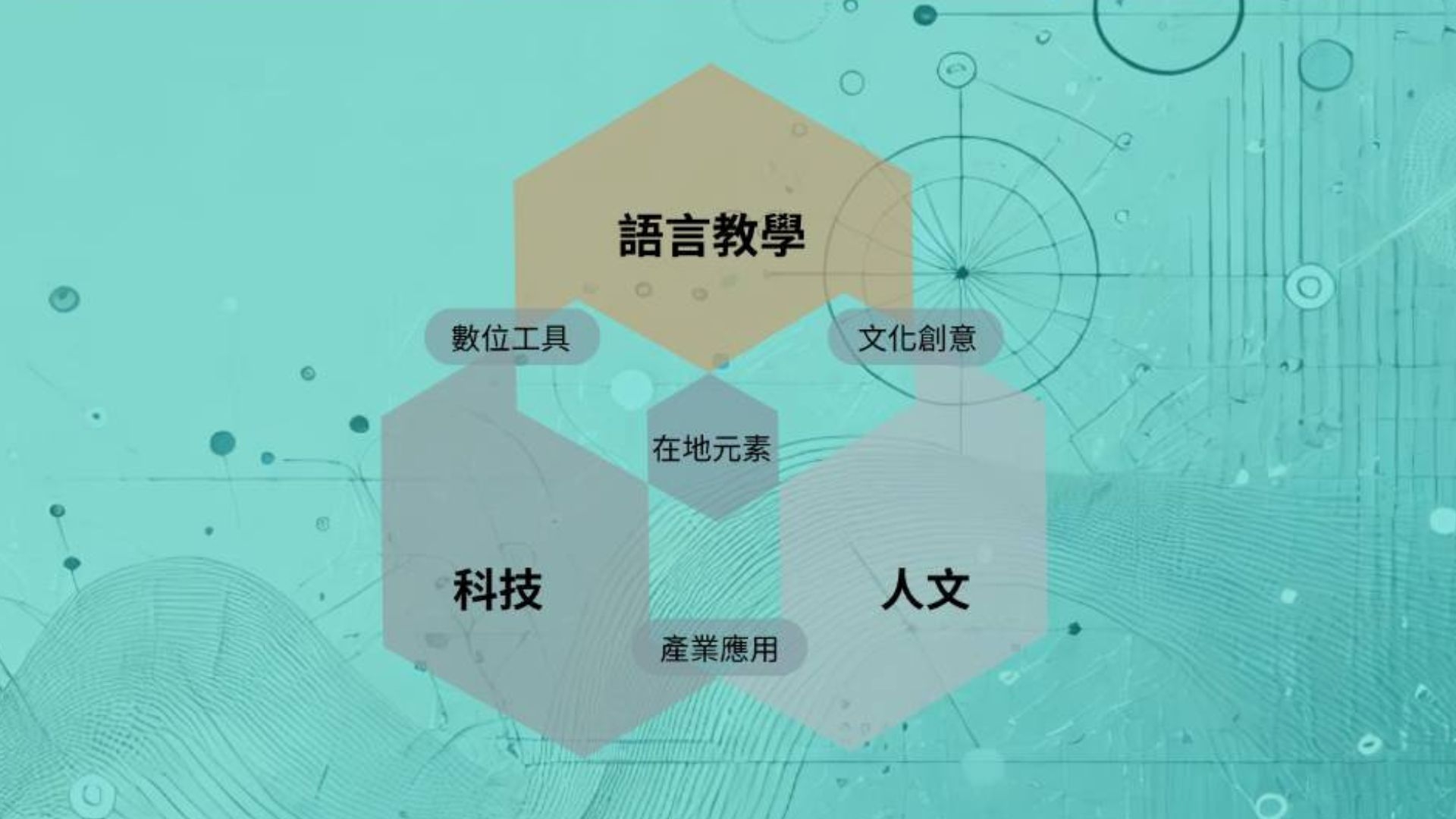
The Master’s Program recruits students from diverse backgrounds. After graduation, students can advance to managerial positions within their original fields or workplaces, especially in language education, Teaching Chinese as a Second Language (TCSL), cultural and creative industries, creative lifestyle industries, cultural heritage applications, performing arts facilities, and overseas community affairs or related research fields.
At the policy level, the Ministry of Education, in collaboration with the Ministry of Foreign Affairs and the Overseas Community Affairs Council, proposed the “Chinese Language Education 2025 Project.” This initiative integrates inter-ministerial resources to establish mechanisms for promoting Chinese language education, curriculum reference guidelines, international teacher standards, and digital teaching and learning platforms. It also aligns Chinese proficiency tests to strengthen Taiwan’s system for international Chinese language education. These foundational developments aim to serve as public educational resources for academia, industry, and government sectors, creating a “National Toolbox for Chinese Education.” The project also plans to establish overseas teaching centers featuring Taiwan’s Chinese language characteristics, expand Taiwan’s soft power internationally, and attract global talent to study Chinese in Taiwan to support bilingual education and meet the growing demand for Chinese language teachers worldwide.
The demand for professionals in TCSL, Content and Language Integrated Learning (CLIL), and cultural and creative industries continues to rise. Research, curriculum development, practical work, policy evaluation, planning, and implementation all represent promising career paths within the job market.
Our university has long maintained strong relationships with overseas communities in Mainland China, Hong Kong, Singapore, Malaysia, Brunei, and Indonesia. Overseas communities donate annually to support school development. Close collaboration with industry benefits academic research, applied cultural industries, and students’ learning and employment opportunities. For Southeast Asian countries such as Vietnam and Thailand, our program can also provide assistance in issues related to language, culture, and demographic transitions. Graduates specializing in TCSL, CLIL, and cultural and creative applications will find additional opportunities in these emerging fields.
Candidates with Republic of China (Taiwan) nationality and meeting any of the following qualifications may apply:
Required Qualifications:
Preferred Professional Experience: